
Showing posts with label #alternative medicine. Show all posts
Showing posts with label #alternative medicine. Show all posts
Saturday, August 22, 2015
AMCC offers a bright career as a Naturopath
Medicines and practices
other than allopathy have recently become quite popular. One of the reasons for
the same could be the western culture adopting alternative ways of treatment.
Although Naturopathy was always a part of Indian ancient culture, with time it
was losing its sheen. But seems the wind has changed his directions. Various
celebrities in India and abroad are soon turning towards naturopathy. Even our
country’s Prime Minister Narendra Modi has faith in Naturopathy. This is
exactly why he recommended this alternate treatment method to Delhi CM Arvind
Kejriwal. Looking at the current trend, Naturopathy is becoming a rage among
people. More and more number of people is depending on Naturopathy. This only
means that there will be an increase in the demand of Naturopaths in near
future. And even then, this trend will continue for long. Alternative Medical Council Calcutta (AMCC) offers various certified courses in Naturopath.
There are
many job avenues open in Naturopathy and to top it, a qualified naturopath can
start its own venture. They are paid pretty well, especially in developed
countries like The USA and The UK where a naturopath earns nothing less than $15000-20000/annum.

Thursday, August 13, 2015
Hydrotherapy
Hydrotherapy is the use of water to revitalize, maintain, and restore health. Hydrotherapy treatments include saunas, steam baths, foot baths, sitz baths, and the application of cold and hot water compresses.


Father Sebastian Kneipp, a 19th century Bavarian monk, is said to be the father of hydrotherapy. Kneipp believed that disease could be cured by using water to eliminate waste from the body.
Hydrotherapy is popular in Europe and Asia, where people "take the waters" at hot springs and mineral springs. In North America, it is often recommended as self-care by naturopathic doctors.
According to proponents of hydrotherapy, cold water is used because it is stimulating and causes superficial blood vessels to constrict, shunting the blood to internal organs. Hot water causes blood vessels to dilate, and removes wastes from body tissues. Alternating hot and cold water is done to improve elimination, decreases inflammation, and stimulates circulation.
 |
| Hubbard Tub with wooden patient lift. |
Types of HydrotherapyHydrotherapy treatments are often given at health spas or recommended as home self-care treatments. These are some types of hydrotherapy:
Sitz bath - There are 2 adjacent tubs of water, one hot and one cold. You sit in one tub with your feet in the other tub, and then alternate. Sitz baths are recommended for hemorrhoids, PMS and menstrual problems, cystitis, polyps.
Warm water baths - Soak in warm water for up to 30 minutes, depending on the condition. Epsom salts, mineral mud, aromatherapy oils, ginger, moor mud, and dead sea salts may be added.
Sauna - Dry heat
Steam bath or Turkish bath
Compresses - Towels are soaked in hot and/or cold water.
Wraps - Cold wet flannel sheets are used to cover the a person lying down. The person is then covered with dry towels and then blankets. The body warms up in response and dries to wet sheets. This is used for colds, bronchitis, skin disorders, infection, and muscle pain.
Wet sock treatment - Used for sore throat, ear infections, headaches, migraines, nasal congestion, upper respiratory infections, coughs, bronchitis, and sinus infections.
Hot fomentation - For treatment of acute conditions such as chest colds and coughs. It seems to relieve symptoms but also decrease the length of the illness.
Is hydrotherapy similar to spa therapy?
Spa therapy is based on the theory that the mineral content of spa water has special health-giving properties. In many European countries, hydrotherapy often takes place in spa water. Although there’s some research that suggests the mineral content of the water may make a difference, other studies show that hydrotherapy has significant benefits regardless of the water used.

So far, scientific support for the benefits of hydrotherapy is limited. If you're considering the use of hydrotherapy, talk with your doctor first. Keep in mind that hydrotherapy, or any other form of alternative medicine, should not be used as a substitute for standard care in the treatment of any health condition.
Side effects
Most forms of hydrotherapy are well tolerated. There is a risk of allergic reaction (also known as contact dermatitis) for some patientsusing essential oils and herbs in their bath water. These individuals may want to test for allergic sensitization to herbs by performing askin patch test (i.e., rubbing a small amount of diluted herb on the inside of their elbow and observing the spot for redness and irritation).People who experience an allergic reaction to an essential oil should discontinue its use and contact their healthcare professional forfurther guidance.
Most forms of hydrotherapy are well tolerated. There is a risk of allergic reaction (also known as contact dermatitis) for some patientsusing essential oils and herbs in their bath water. These individuals may want to test for allergic sensitization to herbs by performing askin patch test (i.e., rubbing a small amount of diluted herb on the inside of their elbow and observing the spot for redness and irritation).People who experience an allergic reaction to an essential oil should discontinue its use and contact their healthcare professional forfurther guidance.
The most serious possible side effect of hydrotherapy is overheating, which may occur when an individual spends too much time in a hottub or jacuzzi. However, when properly supervised, this is a minimal risk.
Research and general acceptance
Hydrotherapy treatments are used by both allopathic and complementary medicine to treat a wide variety of discomforts and disorders.Not as well accepted are invasive hydrotherapy techniques, such as colonic irrigation, enemas, and douching. These internal cleansingtechniques can actually harm an individual by upsetting the natural balance of the digestive tract and the vagina. Most conventionalmedical professionals agree that vaginal douches are not necessary to promote hygiene in most women, and can actually do more harmthan good.
Wednesday, July 1, 2015
Yoga not only cures diseases but help prevent lifestyle disorders
It is often seen that people turn to yoga after they suffer from some ailment. Experts, on the occasion of International Yoga Day, suggested that why not start practising the art much before you become a victim of any disease. They said that yoga is extremely effective in management of diseases in which psychological and social factors, such as stress, play a major role.
During a camp organized at Motijheel ground, a city-based yoga expert Om Prakash Anand, who is an author of nearly 20 books on benefits of practising different 'asanas' of yoga, said that yoga not only cures diseases but also helps prevent lifestyle disorders. Lifestyle diseases, which are also chronic in nature, such as hypertension, diabetes, cancer, strokes etc are the biggest public health challenges being faced by the society which can be prevented by yoga. He said that nearly 2% of total yoga enthusiasts are the one who have incorporated the art in their daily routine without suffering from any prior disease.
"Yoga can help prevent lifestyle diseases. Basically, practising yoga can help change the lifestyle and thus contributes in prevention of these diseases. People suffering from lifestyle diseases have increased drastically. We see that people turn to yoga only after they have tried several medicines. They come to us only after losing hope in medicines. However, each one of us, whether young or adult, should practise yoga, not just to cure the disease but to prevent it," he said.
Anand said that different asanas of yoga should be practised only under the strict guidance of a yoga teacher. "Yoga is an art. If you are a beginner, it is strictly recommended that you first learn it under the guidance of an yoga expert and then practise it," he said.
Sharing her experience, Asha Agarwal, a local, said that after her two sons got married and settled in Delhi, the mere thought of being alone hit her badly. As a result, she suffered from the problem of gastroenteritis. "I tried different medicines, like allopathy and homeopathy etc, but nothing could give me relief. Then a friend of mine suggested me to do yoga, and it really did wonders on me. I can eat anything now and the problem never aggravates. Giving 30 minute to yoga daily is not a tough task. It seems to be difficult but instead it is very easy and relaxing," she said.
Similarly, another local, Radhey Shyam Mishra said that yoga has helped him control his sugar. "I am a diabetic for the past 15 years now. Initially, my sugar used to reach 400 level due to which I had to take insulin injections frequently. However, practising different yoga asanas have given me a second life. I tell all my friends and children to include yoga in their daily routine before it is too late", he said.
Monday, June 29, 2015
Light Therapy for Better Sleep
The benefits of lighting that helps us sleep, improves our mood, reduces depression, or makes us feel more alert on the job are, simply put, priceless.
Light is not just for vision. Humans have a biological clock located in the suprachiasmatic nuclei that generates and regulates circadian rhythms, which are biological rhythms that repeat approximately every 24 hours. These include cycles such as sleep-wake, body temperature, hormone production, and alertness. Light is the main input to synchronize the biological clock to the solar day. If we are not exposed to a sufficient amount of light of the right spectrum, for a sufficient amount of time, and with the right timing, our biological clock becomes desynchronized with the solar day and we may experience decrements in physiological functions, neurobehavioral performance, and sleep.1,2
A person is more likely to experience a good night of sleep when the circadian and homeostatic systems, both of which influence the sleep-wake cycle, are aligned. Sleep homeostasis increases with time awake, contributing to high sleep pressure at night. The circadian system sends an alerting signal to the body during the day, counteracting the increase of sleep pressure with time awake, and a sleeping signal during the night, promoting a consolidated night of sleep.
Another very well-known circadian rhythm is the cycle of melatonin production. Melatonin is a hormone produced by the pineal gland at night and under conditions of darkness. For diurnal species, such as humans, melatonin signals that it is time to sleep. The timing of melatonin onset in the evening, referred to as dim light melatonin onset (DLMO), occurs approximately 2 hours prior to natural bedtimes, and is used as a marker of the circadian clock. Evening exposure to sufficient light will delay the onset of melatonin, delaying bedtimes.
Lighting Characteristics Affecting the Circadian System
Lighting characteristics affecting the circadian system, as measured by acute melatonin suppression and phase shifting of DLMO, are different than those affecting visibility. It is now known that lower levels of light, less than those originally demonstrated in the 1980s, can affect melatonin; however, light levels needed to affect melatonin are still higher than those needed to affect vision.3,4 For example, a warm color night light will allow one to safely navigate at night, but it will not suppress the hormone melatonin. Humans are “blue sky detectors” when it comes to acute melatonin suppression; the peak sensitivity for acute melatonin suppression and phase shifting of DLMO is close to 460 nanometers (nm).5-7
The effects of light on the circadian system vary over the course of the 24-hour day. Morning light, given after the trough of core body temperature that typically occurs in the second half of the night, will advance the timing of sleep in the following cycle, while evening light, given prior to the trough of core body temperature, will delay the timing of sleep.8
Finally, our research shows that it is important to accurately measure light exposures over the 24-hour day, as opposed to taking just a “snapshot” measurement of light exposure at one certain place and time.9,10 The circadian system seems to keep track of light exposure, so that knowing an individual’s light exposure history over the past 24 hours can help determine the best light prescription for the next 24 hours.11 Therefore, a light treatment designed to promote earlier bedtimes should not be limited to exposure to blue light in the morning. It should control the total circadian light exposure during waking hours.
Potential Applications
Keeping in mind that lighting characteristics affecting the circadian system are different than those affecting vision, and, more importantly, that the successful application of light as therapy requires continuous monitoring of one’s light exposure during waking hours, the therapeutic value of “circadian” light (and dark) on special populations has been demonstrated in laboratory and field studies.
Seasonal Affective Disorder
Seasonal affective disorder (SAD) is a subtype of depression, with episodes occurring during winter months and remitting during summer months. The mechanisms of SAD are still unknown, and there are several competing hypotheses as to what causes SAD and how light can be used as a treatment.
One of these is that late daybreak during winter months delays the circadian rhythms of those more susceptible to SAD; in this case, morning light is believed to be effective in treating symptoms of SAD.
Another hypothesis is that the overall melatonin production of those suffering from SAD is greater during winter months than during summer months, which extends the amount of time during the 24-hour day that their bodies think it is nighttime. In this case, light in the early morning or evening is recommended.
While current practice is to use 2,500 lux at the cornea of a white “full spectrum” light box for 2 hours or 10,000 lux at the cornea for 30-minute exposure, more recent studies demonstrated the effectiveness of lower levels (<500 lux at the cornea) of 470 nm (blue light) at improving SAD symptoms.12,13 The use of a more tailored spectrum (ie, increased emission in the short-wavelength region) allows for a reduction in the light level required to elicit the same benefit, which makes the therapy more comfortable, likely increasing compliance.14
Sleep in Older Adults
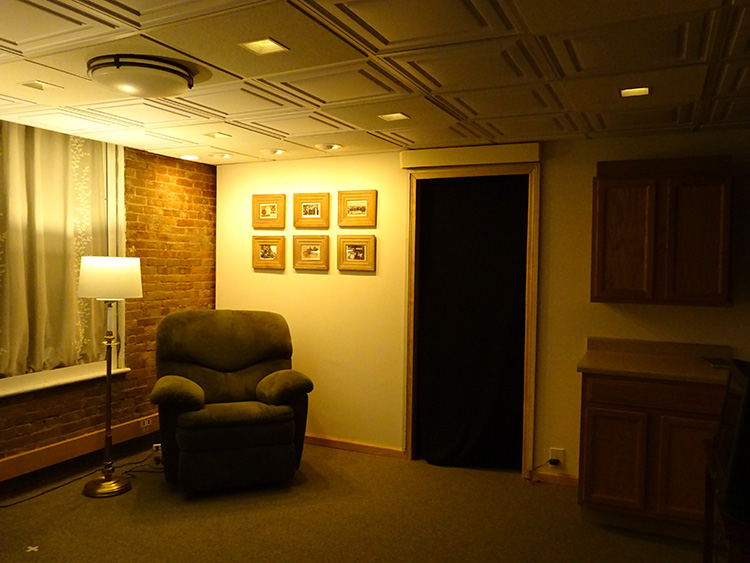
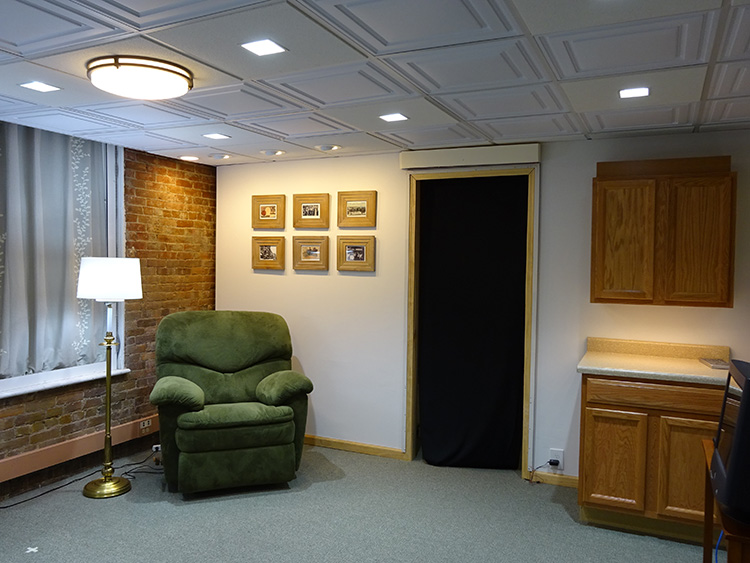
Seniors residing in assisted living facilities are perhaps the best example of a population at risk for circadian disorders. Due to age-dependent reduced retinal light exposures and to fixed lighting conditions in their living environments, seniors are less likely to experience the necessary robust 24-hour light-dark pattern needed for circadian entrainment. Exposure to bright white light (at least 3,000 lux and as high as 8,000 lux at the cornea) for at least 1 hour in the morning for a period of at least 2 weeks was found to improve or consolidate nighttime sleep of individuals with Alzheimer’s disease and related dementias (ADRD).15,16 Research demonstrated that, in ADRD patients, continuous, bright, indirect white light (at least 1,000 lux at the cornea) during daytime hours consolidated rest-activity rhythms,17 attenuated cognitive deterioration, ameliorated depressive symptoms, and attenuated the increase in functional limitations over time.18 Recently, we showed that much lower levels (400 lux at the cornea) of a high correlated color temperature light source (which emits more short-wavelength content) improved objective and subjective sleep and reduced agitation and depression in ADRD patients living in long-term care facilities.14
A 24-hour lighting scheme has been proposed19 that delivers high circadian stimulation during the daytime hours, low circadian stimulation in the evening hours, and night lights that provide perceptual cues to decrease the risk of falls at night without disrupting sleep. Arguably, light therapy in assisted living facilities should be quite effective because it is possible to fully control the 24-hour light-dark pattern, as residents spend the majority of their time indoors in a defined space.
Sleep in Shift Workers
Light can impact circadian rhythms of night shift workers in two ways: phase shifting and acute effects. Phase shifting effects allow permanent night shift workers to cope with being awake at night by providing entrainment to the night shift. However, light exposure control throughout the 24-hour day is needed, making it harder for workers to comply with the new light regimen.
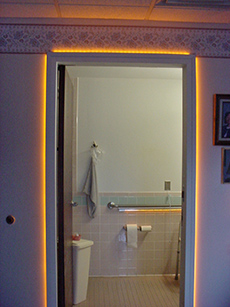 Light can increase alertness in shift workers who are still entrained to a day shift schedule and are coping with night shift work. In most studies to date, the alerting effects of light have been linked to its ability to suppress melatonin, and the suppression of melatonin by light at night has been implicated as an endocrine disruptor and linked to an increased risk of certain types of cancers observed in those working rotating shifts for 20 to 30 years or more.20,21 In a series of recent studies, however, we demonstrated that exposures to both short-wavelength (blue) and long-wavelength (red) lights in the middle of the night increased objective and subjective alertness, reduced subjective sleepiness, and improved certain types of performance tasks, mainly those associated with reaction times.22-24 Our findings suggest that the melatonin pathway does not seem to be the only light-sensitive pathway that can affect alertness at night. These results are consistent with studies showing alerting effects of light during the daytime, when melatonin levels are low.25,26
Although more research is recommended to establish the pathways in the brain associated with the alerting effects of long-wavelength light, using red, rather than blue, light at night might be a good option for increasing alertness without disturbing the melatonin rhythm in shift workers.
Sleep in Adolescents
Teenagers tend to go to sleep late and wake up late. This pattern interferes with their normal functioning because teenagers do not sleep for as many hours as those going to sleep at more normal hours. Light exposure after minimum core body temperature (in the morning) and light restriction in the evening have been shown to advance the phase of the master clock.27 Some evidence has emerged suggesting that the endogenous circadian period is longer, sleep pressure accumulates slower, and the sensitivity to light by the circadian system is greater in adolescents than in adults, especially for those suffering from delayed sleep phase disorder. In fact, recent data from our lab show that adolescents (ages 15-17 years) are more sensitive to evening light from self-luminous devices than those in their twenties.28 Both of these phenomena would functionally delay the timing of the adolescent circadian clock, thereby contributing to later bed and rise times.
Rigid school schedules require teens to be in class all morning, yet schools may not provide adequate light or daylight to stimulate their circadian system, especially in dark winter months. As teenagers spend more time indoors, they may miss out on essential morning light needed to stimulate their circadian system and promote entrainment to the 24-hour solar day.29 In late spring, if teenagers spend more time outdoors after school, the brain’s clock may be delayed by the evening daylight exposure.30 Late spring mornings may also pose a concern because of the very early sunrises. Students who are phase delayed, and thus reach their minimum core body temperature at later clock hours in the morning, may run the risk of receiving too much daylight in the delay portion of the phase response curve while traveling to school in the very early morning.
A lighting intervention designed to deliver light starting mid-morning (eg, after 9 AM) until the end of the school day and provisions to reduce evening light exposures, such as the use of orange-tinted glasses and the control of exposure to self-luminous devices, may help shift the timing of sleep in teenagers. Successful light therapy in this population will likely involve both school administrators and family members.
How Do We Make Light Therapy Successful in Clinical Settings?
The key to successful light therapy is simple: We need to measure our circadian light exposures and then deliver and remove circadian light at the appropriate circadian times.
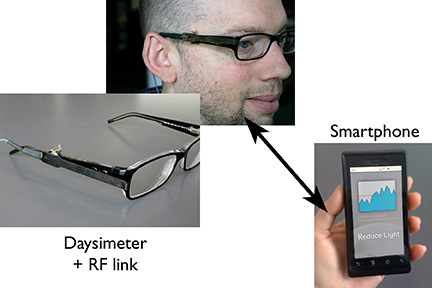
The Daysimeter, developed by the LRC as a research tool, is a calibrated, personal light and activity sensor that continuously records and stores data for measuring circadian light and for quantifying circadian entrainment or disruption.
However, this is easier said than done. We have no practical way to intuitively know when and what type of light is needed for circadian entrainment. Like other medical monitors where we have no conscious access to what is required for good health (eg, glucose monitors for diabetes), we need technologies to measure and track the state of our circadian system. A wireless technology connecting the Daysimeter10 to a smartphone is currently under development. A smartphone (or similar technology) will be able to interpret the light-dark patterns to which an individual is exposed and then recommend, based on models of human circadian entrainment,7,31 current and future light exposure patterns to maintain circadian entrainment. One day, the smartphone or a smartwatch might be able to interface with building lighting systems so that children at schools, nurses at hospitals, or people at home would receive the proper lighting conditions for improved sleep and overall well-being. Until then, if we want to have a good night of sleep, we should keep a regular schedule, increase the amount of circadian light exposure during the daytime hours, and reduce it during the evening hours.
Subscribe to:
Posts (Atom)